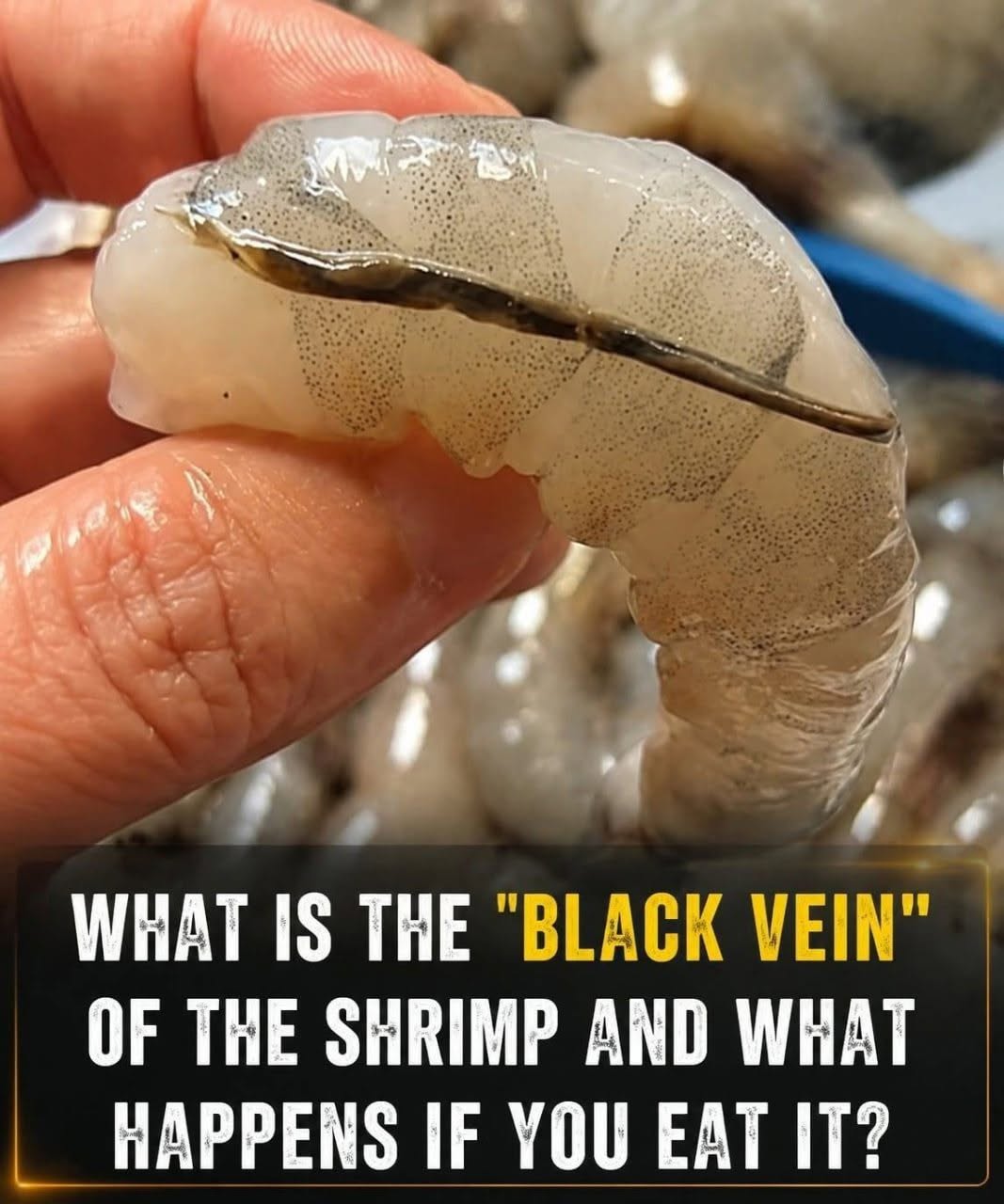
Not necessarily. Context matters.
-
- Small shrimp: The tract is often extremely thin and barely noticeable, and many cooks leave it intact without issue.
- Large shrimp: The tract is more prominent and is usually removed for both visual appeal and better flavor.
This distinction is why many markets sell shrimp that are already peeled and deveined—especially larger sizes intended for presentation-focused dishes.
The Other Line You Might Notice—and Don’t Need to Remove
Shrimp also have a lighter-colored channel along the underside of their bodies. This is a blood vessel, not a digestive tract, and it does not contain waste. It poses no issue and does not need to be removed.
Only the darker line along the back is relevant when people talk about “deveining.”
What the Line Can Reveal About Freshness
While not a definitive test, the appearance of the digestive tract can sometimes offer clues about freshness:
-
- Very dark or thick tract: May suggest the shrimp has been stored longer or not handled optimally.
- Lighter or barely visible tract: Often seen in fresher shrimp or those with a cleaner diet.
This shouldn’t replace proper storage and sourcing practices, but it can serve as an additional visual cue.
Hygiene, Comfort, and Good Kitchen Practice
Continued on next page: